


Working Meeting of the Project Team with Representatives of the Ivano-Frankivsk Chamber of Commerce and Industry
AGREE: AI-Driven Agricultural Innovation Network: Rebuilding Ukraine’s Food Security and Alignment to EU
The AGREE project is not just a response to the challenges of war, it is the creation of a new model of sustainable agriculture.
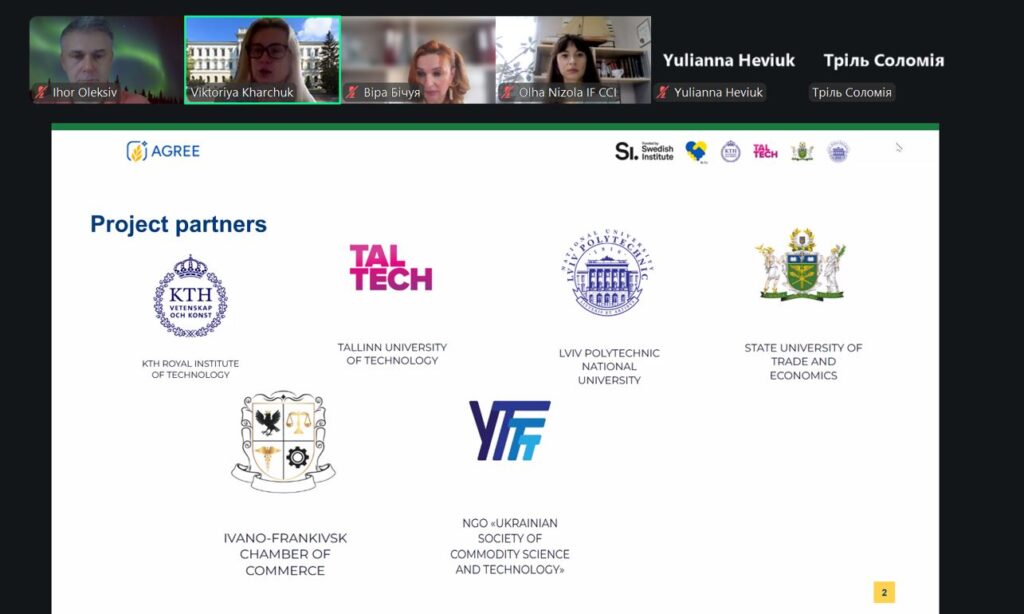
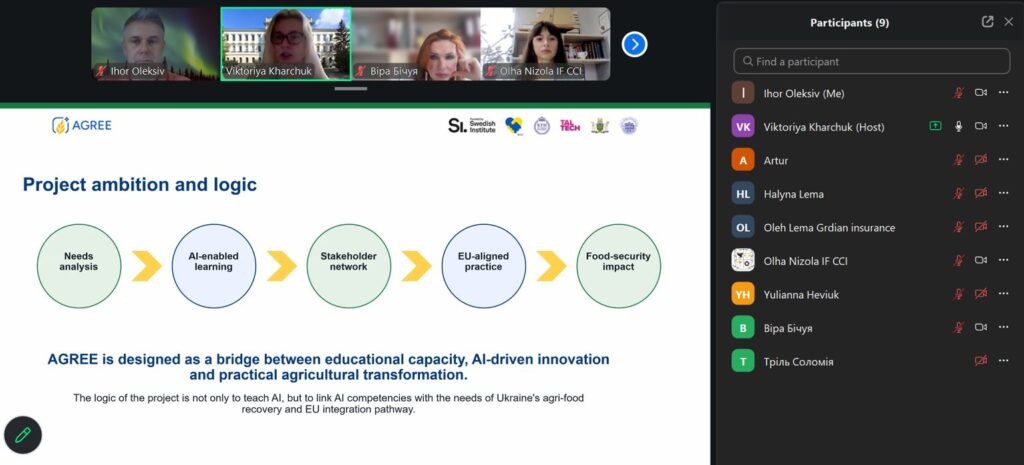
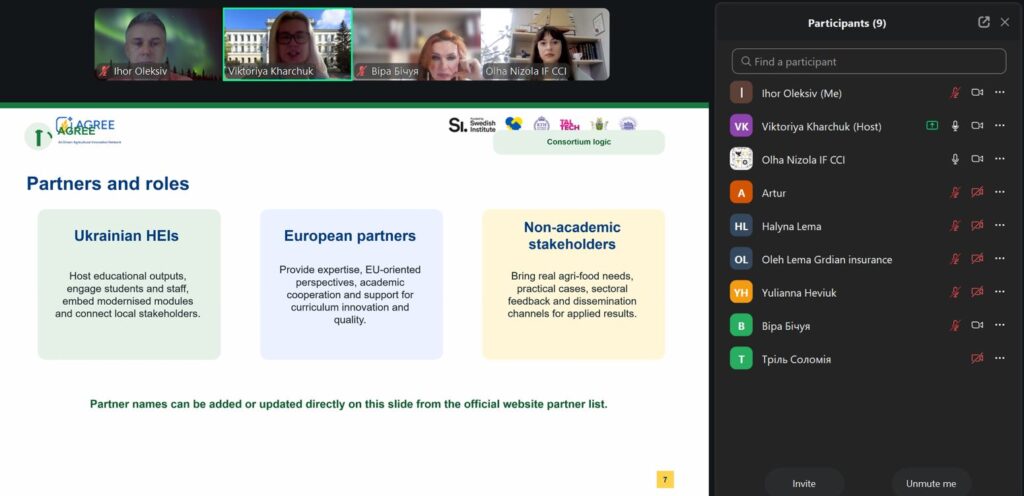
A working meeting took place between the project team members and representatives of the Ivano-Frankivsk Chamber of Commerce and Industry, as part of the AGREE project: AI-Driven Agricultural Innovation Network, which aims to rebuild Ukraine’s food security and align with the EU. The meeting was devoted to discussing the project’s current results, clarifying key activities, and agreeing on the next steps in cooperation.
At the meeting, participants reviewed completed activities such as building the stakeholder network, preparing training materials, engaging agribusiness representatives in educational and advisory roles, and promoting project results among agricultural firms. Focus was given to practical business needs like digitalisation, AI application, boosting agricultural productivity, risk management, and meeting EU standards.
The Ivano-Frankivsk Chamber of Commerce and Industry is an important partner for the project, as it brings together more than 300 business entities and supports entrepreneurship, develops the business environment, attracts international partners, and provides business-oriented training.
During the meeting, the participants thoroughly discussed the draft structure of the comprehensive educational course, the development of which is one of AGREE’s key tasks. As a result of the discussion, the modules and course topics developed by the higher education institutions participating in the AGREE project were agreed. An important area of discussion was also the Train-the-Trainer concept. In particular, it was agreed that the programme would be based on the capacities of Lviv Polytechnic National University and the State University of Trade and Economics. This concept envisages training project researchers, who will later involve university teachers, PhD students, and students as cascade multipliers of the knowledge gained.
The participants also discussed further steps to involve business in developing training products, organising joint events, collecting feedback from representatives of the agricultural sector, and disseminating AGREE results among stakeholders. An important area of future work will be to strengthen the practical orientation of training materials and ensure their relevance to the real needs of agribusiness.
The meeting’s outcomes will inform the further refinement of training materials, the expansion of the AGREE partner network, and the strengthening of the project’s practical orientation. This dialogue will help ensure that AGREE results meet the real needs of the agricultural sector, support the implementation of digital and AI-based solutions, and contribute to the post-war recovery of Ukraine’s food security.